
Have you ever thought about how choosing the right concrete hardener spreader machine could make all the difference in achieving a durable and cost-effective floor? There are many different types of concrete floor hardener spreader machines out there, each with different features. But don’t worry, this article is here to help!
In this article, we’ll be looking at four types of concrete floor hardener spreader machines. Include:
- Manual Dry Shake Material Spreader
- Electric Dry Shake Material Spreader (Walk Behind Type)
- Electric Topping Spreader Machine (Ride-On Type)
- Telescopic Boom Spreader Machine
We’ll explain what they can do and help you choose the right one for your dry shake topping application. So, let’s dive in!
1. Manual Dry Shake Material Spreader
The manual dry shake material spreader is a device used to evenly apply dry shake hardeners to concrete floors. Unlike automated concrete floor hardener spreader machines, the manual spreader relies on human operation. Typically, it is pushed by a worker, who uses a roller or scraper to evenly distribute the hardener, reflective topping, or colour compounds across the floor. It is suitable for smaller-scale construction projects or situations that require fine control over the amount and distribution of the material.
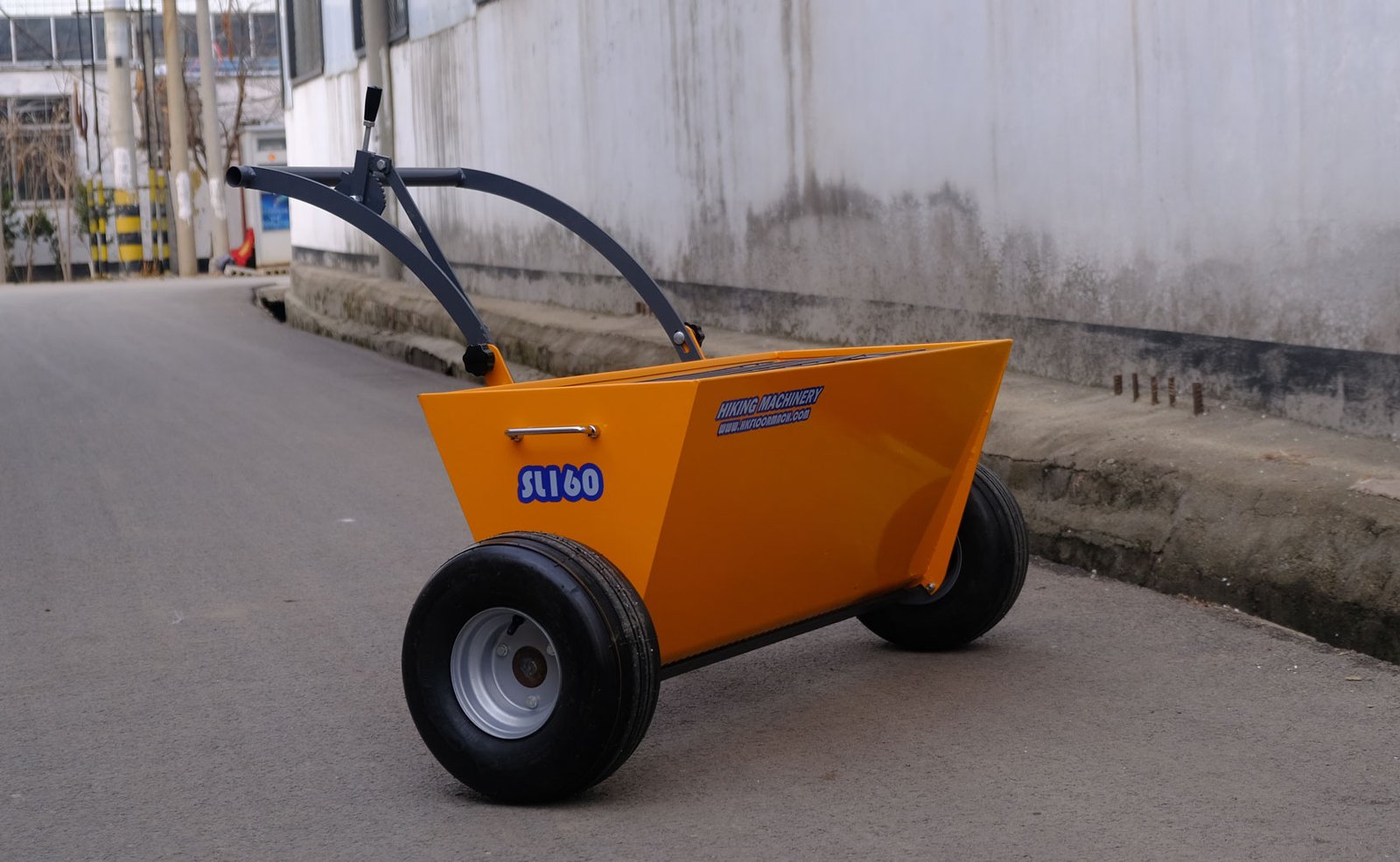
Key features of this machine:
- Low cost: Compared to automated spreaders, manual spreaders are more affordable to purchase and maintain, making them ideal for small projects with limited budgets.
- Flexibility: Manual operation allows for better flexibility in confined or irregularly shaped spaces, making it easier to work in complex environments.
- Precision control: The operator can adjust the amount and distribution of the material, ensuring precise coverage, especially for projects requiring high accuracy. This also reduces material waste and lowers costs.
- Easy maintenance: Due to its simple design, the manual spreader is easier and cheaper to maintain.
However, there are some drawbacks:
- Labor-intensive: Requires manual operation, which can be physically demanding. Prolonged use can lead to worker fatigue, affecting work quality and safety.
- Heavy when loaded: Once filled with material, the spreader can become heavy, and its two wheels may leave marks on freshly poured concrete.
- Limited productivity: The efficiency of the manual spreader depends on the speed and skill of the worker, meaning it cannot complete tasks as quickly as automated equipment.
2. Electric Dry Shake Material Spreader (Walk Behind Type)
The electric dry shake material spreader (walk-behind type) is one of the latest concrete floor hardener spreader machines. This equipment is designed for the easy and efficient distribution of dry shake hardeners, reflective materials, and colourants. Unlike traditional manual methods, this machine uses an electric drive and automatic walking functionality, significantly enhancing construction efficiency and reducing labour costs. It operates with a 48V high-capacity battery, providing adjustable speed for continuous and even material distribution. Additionally, compared to other products, it has a minimal impact on concrete surfaces, effectively avoiding scratches or marks.
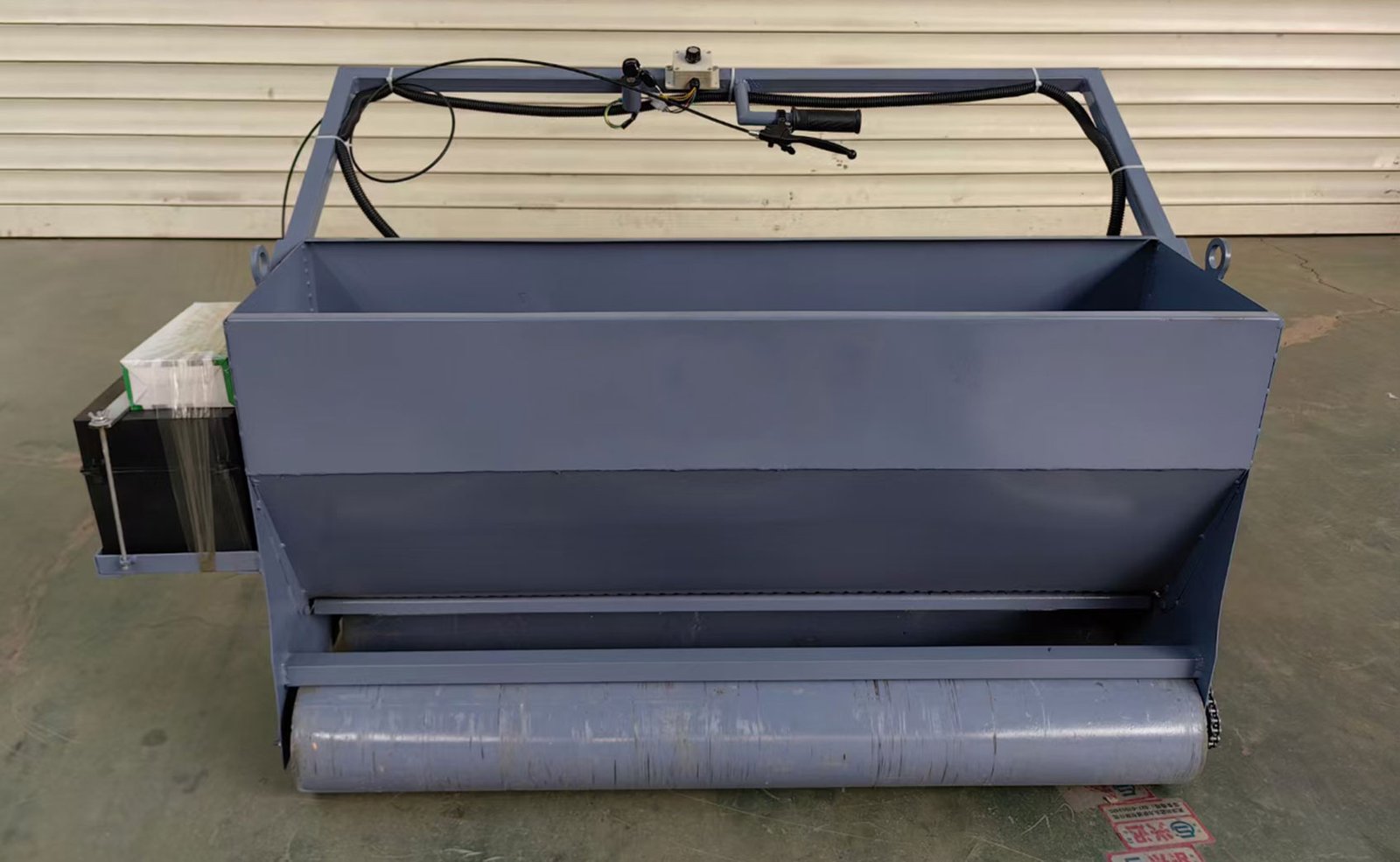
Key features of this machine:
- Compact size and flexibility: The small size makes it easy to manoeuvre and apply the material in tight corners. It is also suitable for smaller projects.
- Concrete surface protection: The walking wheels are designed to protect the newly poured concrete, reducing damage and ensuring quality.
- Wide coverage: With a spread width of up to 1.2 meters, it can cover a larger area in less time, accelerating the construction process.
- Adjustable feed and walking speed: The machine allows for the adjustment of material distribution and walking speed, providing optimal results in different environments.
- Large hopper capacity: The 100kg capacity hopper reduces the frequency of material refills, enhancing continuous operation.
However, there are some drawbacks:
- High initial investment: Compared to manual spreaders, electric equipment has a higher purchase cost.
- Battery and drive system maintenance: The electric components may require regular maintenance or replacement, adding to long-term operational costs.
- Weather sensitivity: Extreme weather conditions, such as very high or low temperatures, may affect battery performance, reducing operational efficiency.
3. Electric Topping Spreader Machine (Ride-On Type)
The ride-on topping spreader is an excellent concrete floor hardener spreader machine designed for the even distribution of various dry shake hardeners. It is widely used in concrete flooring applications. Powered by a high-capacity battery, this machine is durable and maintains a constant material feed speed, ensuring a quality spread. The ride-on topping spreader is particularly easy to operate, allowing users to precisely control the spreading speed, ensuring consistent coverage per square meter. It is equipped with a large hopper (up to 200 kg capacity), which reduces the need for frequent refills and improves work efficiency.

Key features of this machine:
- Increased efficiency: By precisely controlling the material feed and speed, it can complete more work in less time, greatly improving construction efficiency.
- Long battery life: The large-capacity battery supports long working hours, reducing downtime due to battery depletion making it ideal for large or long-term projects.
- Adjustable speed: Users can adjust the speed of material distribution to ensure even coverage per square meter, ensuring consistent quality.
- Ease of operation: The design focuses on user-friendliness, making it easy to learn and operate while also simplifying maintenance.
However, there are some drawbacks:
- High initial cost: Compared to manual spreaders, the purchase cost of electric equipment is higher, which may not be suitable for small projects with limited budgets.
- Battery and drive system maintenance: The electric components may need regular maintenance or replacement, increasing long-term operating costs.
- Weather sensitivity: Extreme weather conditions can affect battery performance, potentially reducing operational efficiency.
Do you need these concrete floor hardener spreader machines?
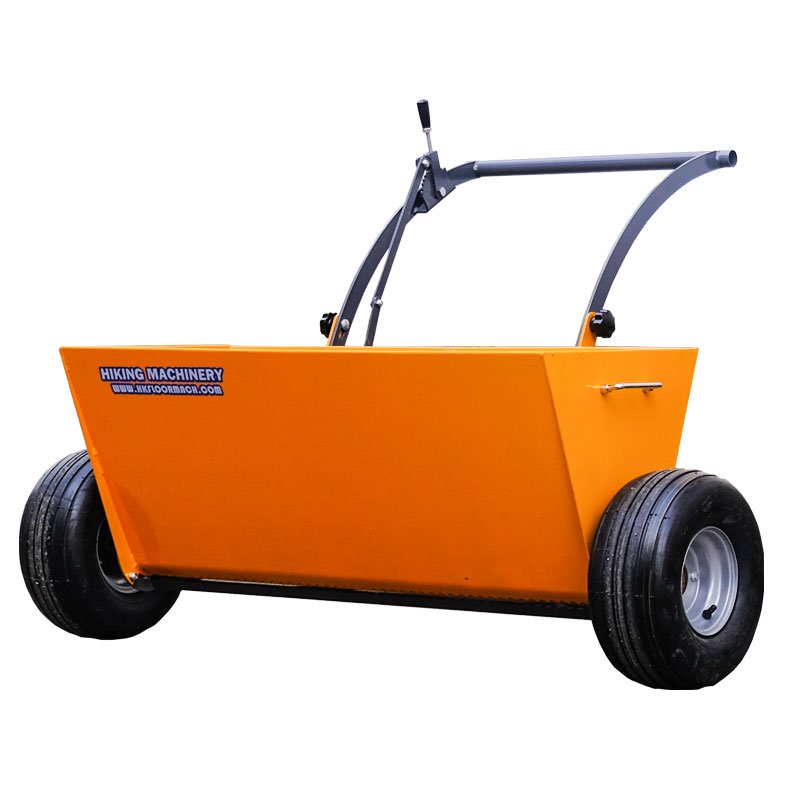
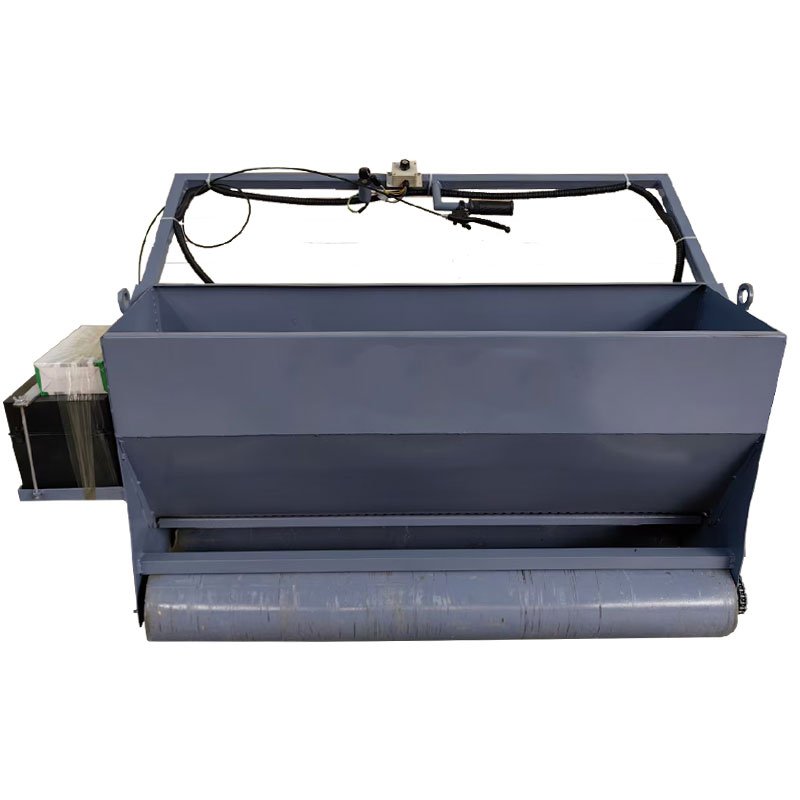
Hiking specialises in the production of various types of concrete floor hardener spreader machines. Welcome to choose our products.

4. Telescopic Boom Concrete Floor Hardener Spreader Machine
The telescopic boom spreader is currently the largest type of concrete floor hardener spreader machine. These machines are specifically designed, such as the STS-11M topping spreader, or mounted on telehandlers (e.g., CONTOP Dry Shake Topping Spreader). They are most commonly used in the construction of large, durable industrial concrete flooring.

Key features of this machine:
- Efficient and even material distribution: Known for distributing dry shake hardeners quickly and evenly, significantly reducing manual labour and construction time.
- Precise control: The machine offers precise control over the material application, ensuring even coverage and reducing waste.
- Labour cost reduction: Automating much of the spreading process it helps reduce labour costs and increase productivity on-site.
- Consistent quality: It provides a uniform coating, ensuring that the entire concrete floor has a consistent surface finish.
However, there are some drawbacks:
- High purchase cost: The price of telescopic boom spreaders is higher, making it a substantial investment for small contractors or projects with limited budgets.
- Specialized operation: Operating this machine requires specific training, which can increase setup time and costs.
- Limited flexibility in tight spaces: The size of the machine can restrict its use in small or confined areas, particularly when manoeuvrability is important.
- Maintenance requirements: Regular maintenance is necessary to keep the machine in optimal working condition, which can add to the overall ownership cost.
Conclusion
This article explores four types of concrete floor hardener spreader machines designed for dry shake topping applications. It covers manual, electric walk-behind, electric ride-on, and telescopic boom spreaders, highlighting their key features, advantages, and drawbacks. The guide aims to help readers choose the right machine based on project size, budget, and efficiency needs.